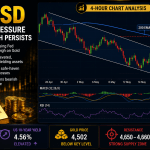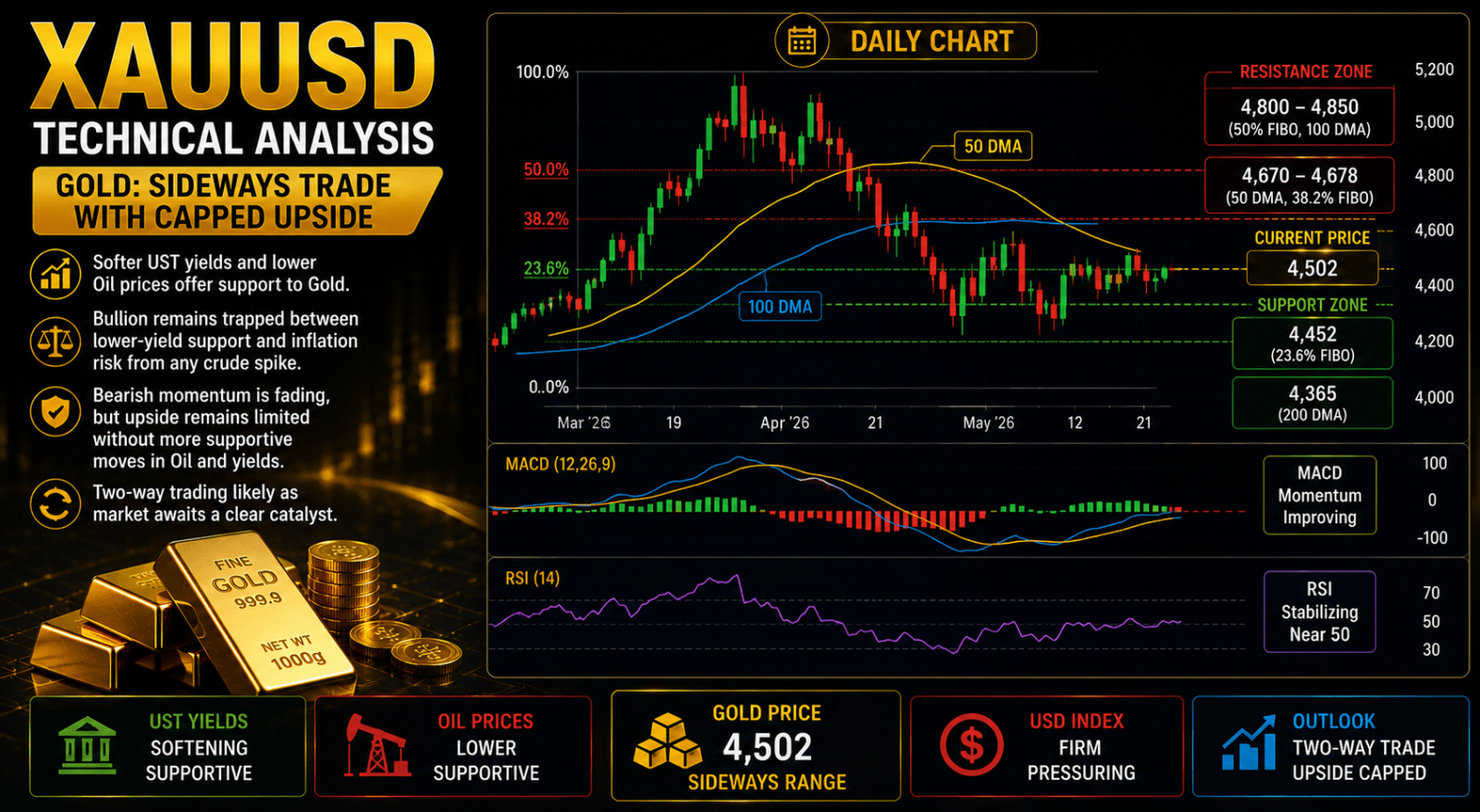
Gold prices are showing signs of stabilization after experiencing recent downside pressure, as declining Treasury yields and softer crude oil prices have helped ease some selling momentum. However, the overall market structure continues to indicate uncertainty, with buyers and sellers still lacking enough strength to establish a decisive trend.
Recent optimism surrounding possible diplomatic developments between the United States and Iran initially created some relief across financial markets. Lower oil prices and easing bond yields temporarily supported precious metals, helping Gold avoid deeper losses. Despite this improvement, the recovery remains limited as traders continue balancing several conflicting market forces.
Gold currently finds support whenever Treasury yields move lower because weaker yields generally reduce the attractiveness of fixed income assets and improve sentiment toward non yielding instruments such as bullion. At the same time, lower energy prices can reduce immediate inflation concerns and provide additional stability for precious metals.
Nevertheless, the market continues facing important risks. Any renewed rise in crude oil prices could quickly change investor expectations. Stronger oil prices may increase inflation fears again, which could force market participants to consider a more aggressive Federal Reserve policy stance. Such expectations often strengthen the US Dollar and increase bond yields, creating renewed pressure on Gold.
For this reason, traders remain cautious regarding upside potential despite recent stabilization signals. The current environment suggests that Gold is moving inside a temporary balancing phase rather than developing a confirmed bullish reversal structure.
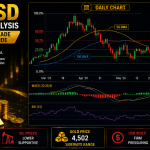
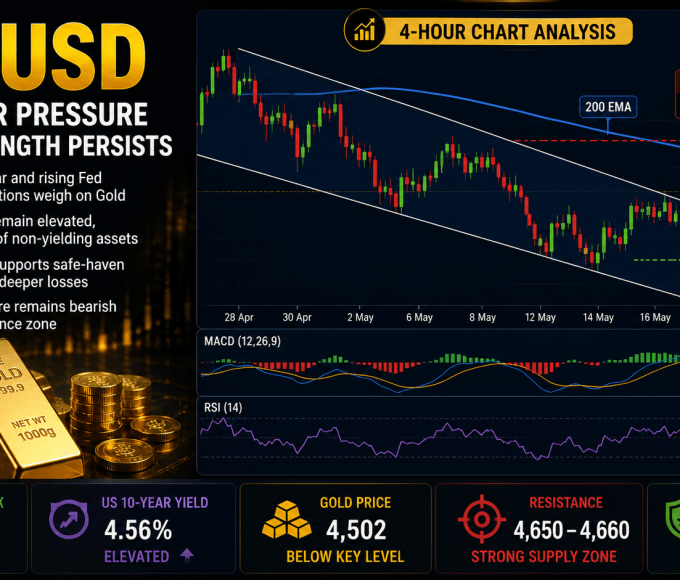
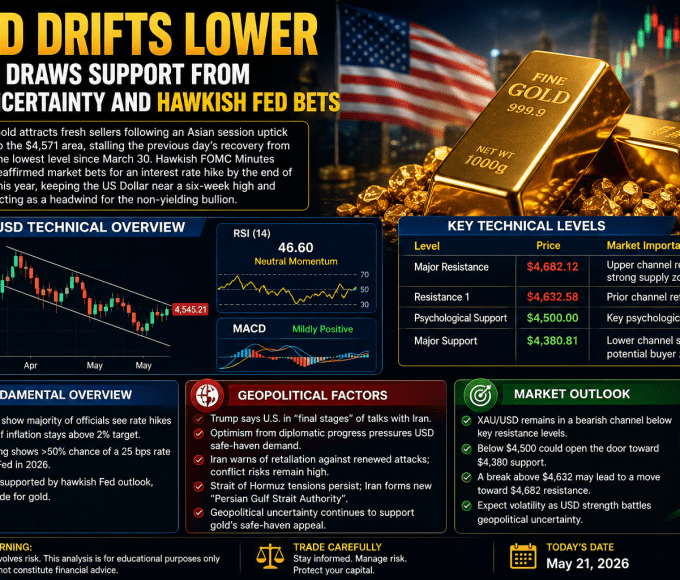
From a technical perspective, bearish pressure appears less aggressive compared with earlier sessions. Momentum indicators show that downside strength has started moderating, suggesting that sellers may be gradually losing control. However, indicators still do not provide confirmation of a stronger upside breakout.
The Relative Strength Index has also stabilized after previous weakness, indicating that market sentiment may be shifting toward a more neutral condition. This does not necessarily imply a bullish trend change but instead suggests that market momentum is becoming more balanced.
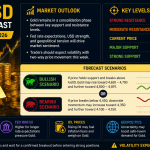
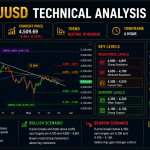
Near term support can be observed around the 4,452 region, with stronger structural support emerging near 4,365. On the upside, resistance appears around the 4,670–4,678 area, while stronger barriers remain positioned near 4,800–4,850.
Overall, Gold currently appears to be entering a two way trading environment where both upward and downward moves remain possible. Until stronger catalysts emerge through inflation data, Federal Reserve expectations, Treasury yield movement, or geopolitical developments, traders may continue seeing range bound conditions across XAUUSD.