Xauusd Latest News: Gold Falls Below $4,550 As Rising Treasury Yields And Iran Tensions Shake The Market
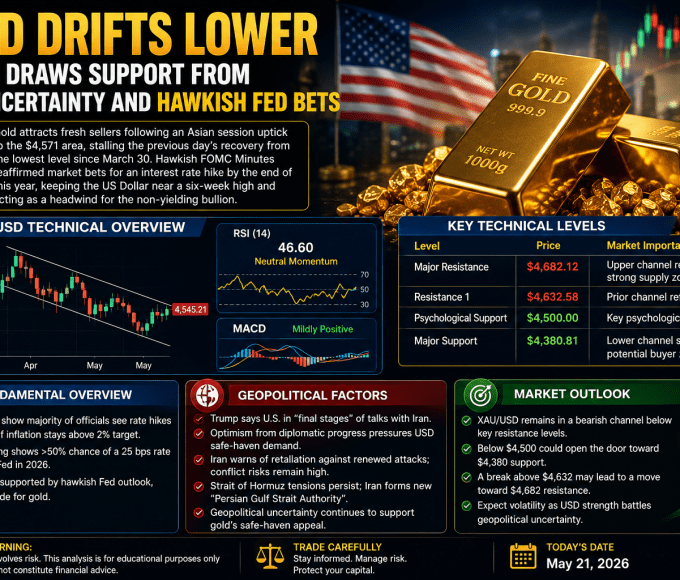
Gold prices experienced one of the sharpest declines of the month on Friday as XAU/USD dropped more than 2.30% amid surging US Treasury yields, persistent inflation concerns, and escalating geopolitical tensions involving the United States and Iran. The precious metal briefly collapsed toward the $4,511 region before stabilizing near $4,551, creating heavy volatility across global commodity and currency markets.
The latest decline in gold came despite worsening geopolitical uncertainty in the Middle East. Normally, rising geopolitical tensions support safe-haven assets such as gold. However, the current market environment has become increasingly complicated because traders now believe that prolonged conflict between the United States and Iran could trigger another powerful wave of global inflation through rising energy prices.
Oil prices surged aggressively after US President Donald Trump signaled growing impatience toward Iran, increasing fears that tensions in the region could escalate further. Markets immediately reacted to concerns surrounding global energy supply stability and the possibility of renewed military confrontation near critical shipping routes. As oil prices moved sharply higher, investors became increasingly worried that elevated energy costs could spread inflationary pressure throughout the global economy once again.
This inflation fear became one of the primary reasons behind the aggressive selloff in gold prices. Investors are now concerned that central banks, especially the Federal Reserve, may be forced to maintain restrictive monetary policy for much longer than previously expected. Some market participants are even beginning to discuss the possibility of additional interest rate hikes if inflation continues accelerating during the coming months.
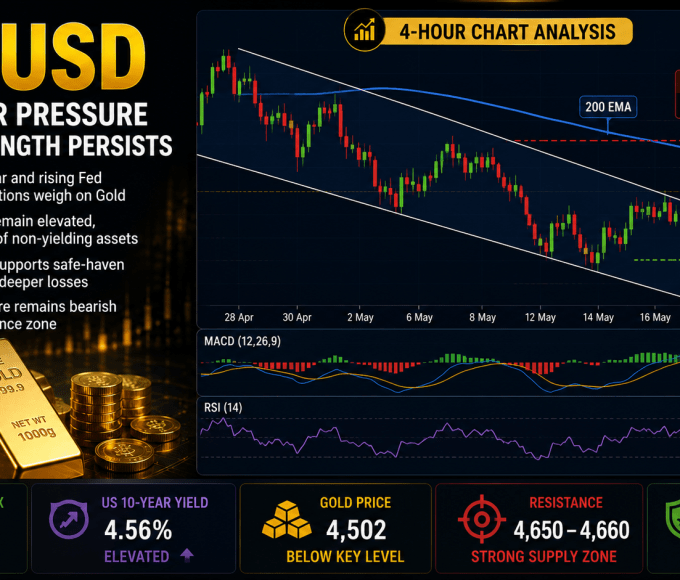
The US Treasury market reflected these concerns immediately. The yield on the benchmark 10-year Treasury note surged toward 4.591%, approaching yearly highs and threatening the previous major peak near 4.627%. Rising Treasury yields usually create significant bearish pressure on gold because bullion does not generate interest returns. When government bond yields rise aggressively, investors often move capital away from non-yielding assets like gold and toward higher-yielding fixed-income instruments.
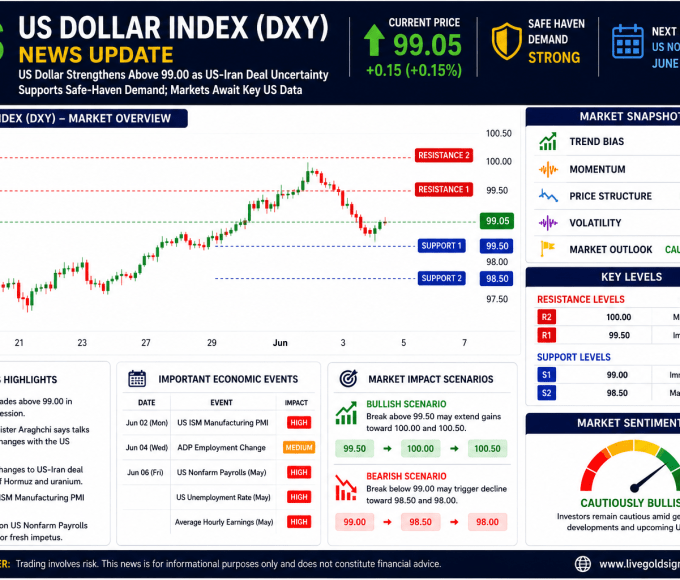
At the same time, the US Dollar Index (DXY) strengthened sharply and climbed near 99.19. The stronger US Dollar created an additional headwind for XAU/USD because gold becomes more expensive for international investors holding foreign currencies. The combination of rising Treasury yields and a stronger dollar generated intense bearish momentum across the gold market throughout the session.
Inflation Data Changed Market Expectations
The market reaction was also heavily influenced by this week’s US inflation data releases. Earlier inflation reports showed that price pressures inside the US economy remain significantly elevated. These inflation readings effectively reduced expectations that the Federal Reserve could begin cutting interest rates anytime soon.
Only a few weeks ago, many investors still believed that the Federal Reserve might eventually shift toward a more accommodative stance later in the year. However, stronger inflation figures forced traders to rapidly reprice interest rate expectations. Financial markets are now increasingly expecting the Fed to maintain higher interest rates throughout the remainder of 2026.
Several Federal Reserve officials reinforced this narrative during the week by emphasizing that controlling inflation remains their highest priority. Some policymakers even hinted that additional tightening could become necessary if inflationary pressure continues rising due to energy costs and geopolitical disruptions.
This “higher-for-longer” interest rate outlook created a difficult environment for gold traders. Since gold traditionally performs best during periods of lower interest rates and weaker Treasury yields, the recent shift toward hawkish monetary policy expectations significantly weakened bullish momentum across XAU/USD.
Strong US Economic Data Added More Pressure
Additional pressure came from stronger-than-expected US industrial production data. Industrial output increased by 0.7% month-over-month in April, significantly above market expectations of 0.3%. This data suggested that the US economy remains relatively resilient despite elevated borrowing costs and restrictive monetary policy conditions.
The stronger economic performance reduced fears of an immediate economic slowdown and further supported the argument that the Federal Reserve may not need to cut interest rates anytime soon. As a result, traders continued increasing bets that US rates could remain elevated through the end of the year.
Technical Structure Of XAU/USD
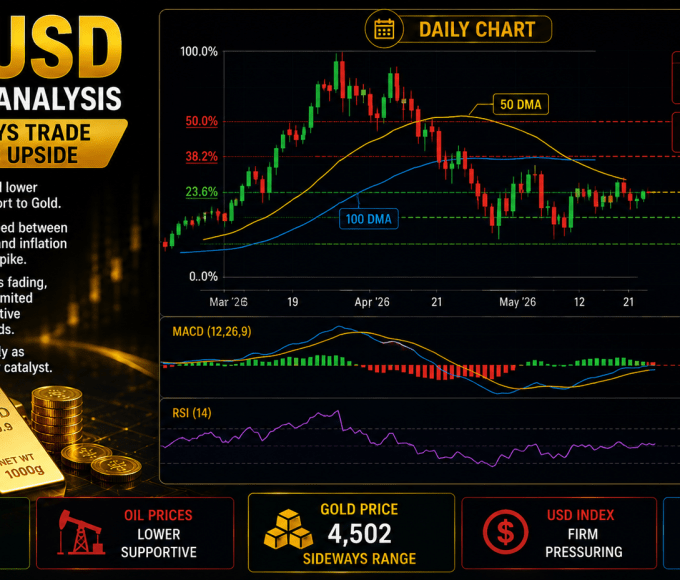
From a technical perspective, gold has entered an extremely sensitive trading zone. The sharp breakdown below the $4,600 psychological region triggered aggressive liquidation pressure and activated additional selling momentum across lower timeframes. Bears temporarily pushed prices toward the $4,511 support area before buyers attempted a short-term stabilization.
The current market structure suggests that traders are now closely monitoring whether gold can successfully defend the broader structural support region around $4,500. This level has become critically important because a decisive breakdown below it could expose XAU/USD to deeper correctional pressure in the coming sessions.
However, despite the recent bearish momentum, some longer-term market participants still believe that gold’s broader bullish structure remains intact. Institutional demand, central bank accumulation, and geopolitical uncertainty continue supporting long-term interest in precious metals. Because of this, many traders expect strong buying activity to emerge during major corrections toward key support zones.
Important Market Levels Traders Are Watching
| Level | Price | Importance |
| Major Resistance | $4,600 | Key recovery barrier for bulls |
| Current Price Zone | $4,511 — $4,551 | High-volatility trading area |
| Critical Support | $4,500 | Major structural support zone |
| Lower Support | $4,420 | Next downside liquidity region |
Outlook For Next Week
Looking ahead, traders will closely monitor upcoming US housing data, labor market reports, Treasury yield movement, and additional comments from Federal Reserve officials. Markets are expected to remain highly sensitive to inflation expectations and geopolitical developments involving Iran and the Middle East.
If Treasury yields continue climbing and the US Dollar maintains strength, gold could remain under bearish pressure in the short term. However, any sudden escalation in geopolitical tensions or signs of slowing inflation could quickly revive safe-haven demand and trigger another sharp recovery in XAU/USD.
Overall, the current gold market environment remains extremely volatile as traders attempt to balance inflation fears, monetary policy expectations, geopolitical uncertainty, and institutional demand. This combination is creating rapid price swings and unstable trading conditions across global precious metal markets.
Risk Warning: Trading gold carries significant risk. Educational purposes only. Not financial advice.